
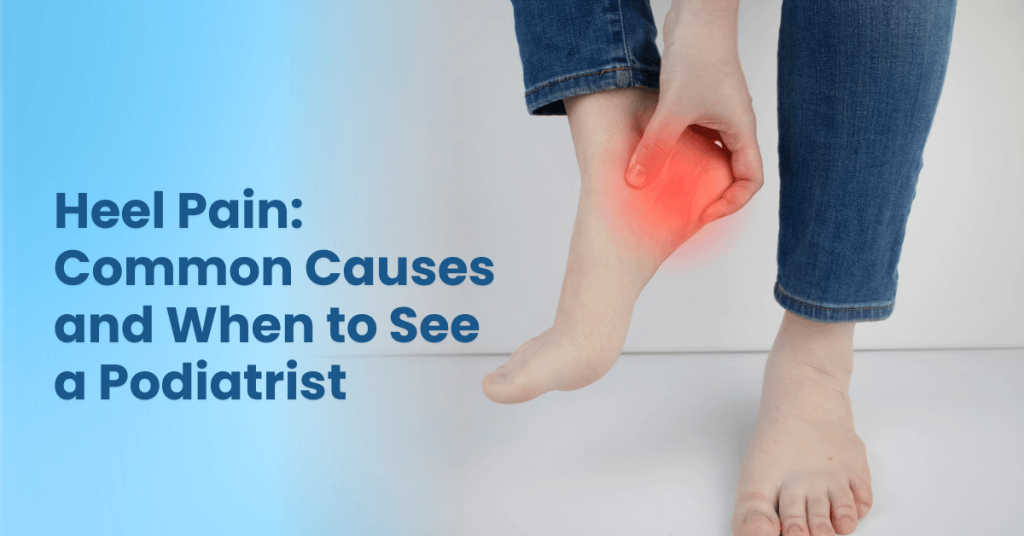
Heel pain is a common foot complaint that can affect people of different ages and activity levels. It may appear after increasing your exercise, spending long hours standing, changing footwear or sometimes without an obvious trigger.
While occasional mild discomfort may improve with rest and activity modification, persistent heel pain can indicate an underlying problem involving the plantar fascia, Achilles tendon, heel bone or surrounding structures.
Understanding the possible causes of heel pain can help you recognise when simple self-care may be reasonable and when an assessment by a podiatrist or another healthcare professional may be appropriate.
What Causes Heel Pain?
The heel is exposed to considerable force during everyday movement. Each time you walk, run or jump, the structures around the heel help absorb and distribute that load.
Heel pain can develop when these tissues become irritated, overloaded or injured.
Common causes and contributing factors include:
- Plantar fasciitis
- Achilles tendon problems
- Bursitis
- Stress fractures
- Changes in physical activity
- Poorly fitting or unsupportive footwear
- Certain foot shapes or biomechanics
- Injury
- Some forms of arthritis
The location and pattern of your pain can provide clues about the cause, but persistent symptoms should be properly assessed rather than self-diagnosed. (healthdirect.gov.au)
Plantar Fasciitis: A Common Cause of Heel Pain
Plantar fasciitis is one of the most common causes of pain underneath the heel.
The plantar fascia is a strong band of connective tissue running from the heel towards the toes. It helps support the arch of the foot and plays an important role during walking.
Plantar fasciitis develops when this tissue becomes irritated or overloaded.
A typical symptom is pain underneath the heel that feels particularly noticeable during the first few steps after getting out of bed or after sitting for an extended period.
The pain may improve after moving around but return after prolonged standing or activity. (healthdirect.gov.au)
What Can Contribute to Plantar Fasciitis?
Several factors may increase stress on the plantar fascia.
These can include:
- Running or other repetitive impact activities
- Suddenly increasing exercise intensity
- Spending long periods standing
- Tight or weak calf muscles
- Flat feet or high arches
- Poorly supportive footwear
- Pregnancy
- Increased body weight
Plantar fasciitis can also occur without an obvious cause.
Importantly, the condition is not necessarily caused by a single activity or lifestyle factor. Often, several factors contribute to increased load through the foot. (healthdirect.gov.au)
Could Heel Pain Come From the Achilles Tendon?
Pain at the back of the heel may involve the Achilles tendon.
The Achilles tendon connects the calf muscles to the heel bone and plays an important role when walking, running and pushing off the ground.
Achilles tendinopathy can develop when the tendon is repeatedly exposed to more load than it can comfortably tolerate.
Symptoms may include:
- Pain behind the heel
- Morning stiffness
- Tenderness
- Pain during or after exercise
- Thickening or swelling around the tendon
Healthdirect lists Achilles tendinitis among the conditions that may cause heel pain. (healthdirect.gov.au)
Are Heel Spurs Responsible for Heel Pain?
Heel spurs are commonly associated with heel pain, but they are not always the actual cause.
A heel spur is a bony growth that can develop around the heel bone. Some people with plantar fasciitis also have heel spurs visible on imaging.
However, people can have heel spurs without experiencing pain.
Healthdirect notes that while plantar fasciitis is commonly associated with heel spurs, the spur itself may not necessarily be responsible for the symptoms. (healthdirect.gov.au)
This is why treatment should focus on the clinical cause of the pain rather than an imaging finding alone.
Other Possible Causes of Heel Pain
Not every painful heel is plantar fasciitis.
Other potential causes include:
Bursitis
Bursae are small fluid-filled sacs that reduce friction between tissues. Irritation of a bursa around the heel can cause tenderness, swelling and pain.
Stress Fractures
Repeated loading of the heel bone can sometimes result in a stress fracture. These injuries may be associated with running, jumping or sudden increases in high-impact activity.
Nerve Problems
Nerve irritation or compression may produce burning, tingling, numbness or shooting pain around the heel.
Arthritis
Some forms of arthritis and inflammatory conditions can affect the foot and heel.
Injury
A sudden impact, fall or sporting injury may damage the bones or soft tissues around the heel.
Better Health Channel identifies several possible causes of heel pain, including plantar fasciitis, stress fractures, bursitis and certain systemic conditions. (betterhealth.vic.gov.au)
Can Bad Shoes Cause Heel Pain?
Footwear can contribute to heel discomfort, particularly when combined with other factors.
Shoes that do not fit correctly or provide appropriate support for your activity may change how forces are distributed through your feet.
Potential footwear-related issues include:
- Worn-out cushioning
- Poor fit
- Inadequate heel support
- Shoes that are unsuitable for your activity
- Abruptly changing to a very different style of footwear
- Spending extended periods in shoes that aggravate existing symptoms
Better Health Channel recommends choosing footwear based on factors including fit, support, cushioning and the activity for which the shoes will be used. (betterhealth.vic.gov.au)
However, footwear is rarely the only factor worth considering when heel pain persists.
Can Increasing Exercise Trigger Heel Pain?
Yes.
A sudden increase in walking, running, sport or other weight-bearing activity can increase the load placed on the heel.
This may happen when someone:
- Starts running for the first time
- Rapidly increases running distance
- Returns to sport after a break
- Changes training surfaces
- Adds more high-impact exercise
- Suddenly spends significantly more time walking or standing
Healthdirect recommends increasing exercise gradually to help reduce the risk of plantar fascia problems. (healthdirect.gov.au)
Gradual progression gives the muscles, tendons and other tissues time to adapt to increased physical demands.
Why Persistent Heel Pain Shouldn’t Be Ignored
Mild heel pain can sometimes settle with temporary activity modification and appropriate self-care.
However, persistent pain can begin to affect how you walk.
You may unconsciously:
- Limp
- Avoid putting weight through the painful heel
- Shift more weight onto the other foot
- Reduce normal physical activity
- Change how you move during work or sport
Healthdirect notes that changes to walking associated with plantar fasciitis may contribute to other problems and slow recovery. (healthdirect.gov.au)
Persistent pain also deserves assessment because not every case is plantar fasciitis. Determining the cause helps ensure that management is appropriate for the actual condition.
When Should You See a Podiatrist?
A podiatrist is a healthcare professional trained to diagnose, prevent and manage conditions affecting the feet and lower limbs.
Healthdirect notes that podiatrists commonly manage problems including heel and arch pain, sporting injuries and other foot conditions. (healthdirect.gov.au)
Consider seeing a podiatrist in Wollongong or another qualified healthcare professional if:
- Heel pain persists or repeatedly returns
- Pain is becoming worse
- Walking is becoming difficult
- Pain interferes with work, exercise or everyday activities
- You have significant swelling
- You experience numbness or tingling
- You are changing how you walk because of the pain
- Home management has not improved your symptoms
An assessment may also be particularly important if you have diabetes or another condition that affects circulation, sensation or foot health.
What Happens During a Podiatry Assessment?
A podiatrist will usually begin by asking questions about your symptoms and medical history.
They may ask:
- When the pain started
- Exactly where it hurts
- Whether pain is worse in the morning
- What activities aggravate it
- What type of exercise you perform
- Whether you have recently changed your activity levels
- What shoes you normally wear
- Whether you have had previous foot or ankle injuries
- What treatments you have already tried
The physical assessment may include examining your foot and ankle, areas of tenderness, range of movement, strength and walking pattern.
Podiatrists can also assess how your feet and lower limbs function during movement. (healthdirect.gov.au)
Do You Need an X-Ray for Heel Pain?
Not necessarily.
Many common causes of heel pain can initially be assessed based on your symptoms, medical history and physical examination.
Healthdirect notes that imaging such as X-rays, ultrasound or MRI may sometimes be recommended depending on the suspected cause. (healthdirect.gov.au)
For example, further investigation may be considered if there is concern about:
- A stress fracture
- Significant injury
- Persistent or unexplained symptoms
- Another underlying condition
Your healthcare professional can determine whether imaging is clinically appropriate.
What Does Heel Pain Treatment Involve?
Appropriate heel pain treatment depends on what is causing the symptoms.
For conditions such as plantar fasciitis, conservative management may involve:
- Temporarily modifying activities that aggravate symptoms
- Stretching
- Strengthening exercises
- Ice
- Appropriate footwear
- Heel pads or arch supports
- Taping
Healthdirect notes that plantar fasciitis can take weeks or months to settle and that treatment commonly begins with conservative approaches. (healthdirect.gov.au)
A podiatrist may develop an individual management plan based on your diagnosis, lifestyle, occupation and activity goals.
Can Exercises Help Heel Pain?
Exercises may be useful for certain causes of heel pain.
Depending on the condition, a management programme may focus on:
- Calf flexibility
- Ankle mobility
- Plantar fascia stretching
- Foot strength
- Calf strength
- Progressive loading
However, there is no single exercise programme suitable for every type of heel pain.
For example, exercises appropriate for plantar fasciitis may not be suitable for an acute stress injury.
An assessment can help determine which exercises are appropriate and how quickly activity should be progressed.
Can Orthotics Help?
Orthotics are devices worn inside shoes to support the foot or modify how forces are distributed during movement.
They may be useful for certain foot conditions, including some cases of plantar fasciitis.
However, not everyone with heel pain needs custom orthotics.
Better Health Channel notes that foot orthoses may form part of treatment for conditions including plantar fasciitis, but management can also include footwear changes and exercises. (betterhealth.vic.gov.au)
Whether orthotics are appropriate should be determined after an individual assessment.
What Can You Do at Home for Mild Heel Pain?
If your heel pain is mild and there has been no significant injury, some simple measures may help while monitoring your symptoms.
These may include:
- Reducing activities that clearly aggravate the pain
- Avoiding sudden increases in running or walking
- Wearing comfortable, supportive footwear
- Using ice for short periods if appropriate
- Gradually returning to activity as symptoms improve
For plantar fasciitis, Healthdirect also recommends stretching the plantar fascia and calf muscles and avoiding activities that aggravate symptoms. (healthdirect.gov.au)
If symptoms are persistent, worsening or affecting normal movement, professional assessment is preferable to repeatedly attempting different home treatments without knowing the cause.
When Does Heel Pain Need More Urgent Medical Attention?
Some situations require more prompt medical assessment.
Seek medical advice if heel pain:
- Follows a significant injury
- Is severe or rapidly worsening
- Prevents you from bearing weight
- Is associated with substantial swelling
- Occurs with numbness or loss of sensation
- Is accompanied by redness, warmth or signs of infection
People with diabetes should take new foot injuries, wounds or unexplained foot pain particularly seriously because diabetes can affect sensation, circulation and healing. (healthdirect.gov.au)
Frequently Asked Questions
What is the most common cause of heel pain?
Plantar fasciitis is one of the most common causes of heel pain. It typically causes pain underneath the heel that can be particularly noticeable during the first few steps after getting out of bed or after resting. (healthdirect.gov.au)
Can bad shoes cause heel pain?
Unsuitable or poorly fitting footwear can contribute to heel pain, particularly when combined with increased activity or existing foot problems. Appropriate fit, cushioning and support should be considered when selecting footwear. (betterhealth.vic.gov.au)
When should I see a podiatrist?
Consider seeing a podiatrist if heel pain persists, repeatedly returns, interferes with walking or everyday activities, or does not improve with basic self-care. Podiatrists assess and manage a range of foot and lower-limb conditions, including heel pain. (healthdirect.gov.au)
How is plantar fasciitis different from a heel spur?
Plantar fasciitis involves irritation of the plantar fascia underneath the foot. A heel spur is a bony growth around the heel. Heel spurs can occur alongside plantar fasciitis but may also be present without causing pain. (healthdirect.gov.au)
Should I stop exercising if my heel hurts?
Not necessarily. Activity modification may be more appropriate than stopping all movement, depending on the cause and severity of your symptoms. Avoid activities that clearly worsen the pain and seek professional advice if symptoms persist.
How long does heel pain take to improve?
Recovery depends on the cause and severity of the problem. Plantar fasciitis, for example, may take weeks or months to improve. An individual assessment can help determine an appropriate management plan and expectations for recovery. (healthdirect.gov.au)
The Bottom Line
Heel pain can result from several conditions, including plantar fasciitis, Achilles tendon problems, stress injuries and bursitis. Footwear, sudden changes in physical activity and individual foot mechanics may also contribute.
Because the right heel pain treatment depends on the underlying cause, persistent or recurring symptoms should not simply be ignored or assumed to be plantar fasciitis.
If heel pain is interfering with walking, work, sport or everyday activities, a podiatrist can assess your symptoms, foot function, footwear and activity patterns and recommend management appropriate to your individual needs.