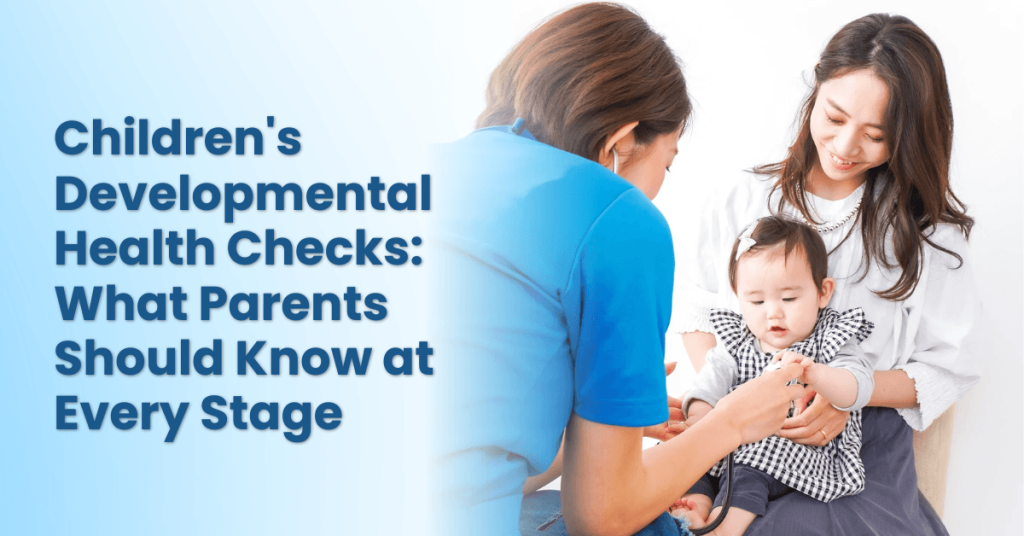
Every child grows and develops at their own pace, but there are important developmental milestones that help parents and healthcare professionals monitor a child’s progress. Children’s developmental health checks are designed to assess your child’s physical, emotional, social and developmental wellbeing, helping identify any concerns early so appropriate support can be provided if needed.
These routine assessments are not simply about measuring height and weight; they provide an opportunity to monitor learning, communication, movement and behaviour as your child grows from infancy through to school age.
What Are Children’s Developmental Health Checks?
A child development check is a routine assessment performed by a GP or other healthcare professional to evaluate whether your child is developing as expected for their age.
Developmental health checks typically assess several key areas, including:
- Physical growth
- Gross motor skills
- Fine motor skills
- Speech and language development
- Social interaction
- Emotional development
- Behaviour
- Vision and hearing
- General health and wellbeing
These assessments help ensure children receive appropriate support if developmental concerns arise.
Why Are Developmental Health Checks Important?
Children develop rapidly during their first five years of life.
While every child develops differently, identifying developmental concerns early can make a significant difference in accessing appropriate assessments and support services.
Early developmental checks may help identify:
- Speech and language delays
- Motor skill difficulties
- Hearing or vision concerns
- Behavioural challenges
- Learning difficulties
- Social communication differences
- Developmental disorders that may require further assessment
Many children simply need reassurance and routine monitoring, while others may benefit from additional assessment or early intervention.
What Areas of Development Are Assessed?
Physical Growth
Your GP will monitor:
- Height
- Weight
- Head circumference (during infancy)
- Growth patterns over time
Consistent growth provides useful information about your child’s overall health and nutrition.
Gross Motor Skills
Gross motor skills involve large body movements.
Examples include:
- Rolling over
- Sitting independently
- Crawling
- Walking
- Running
- Jumping
- Climbing
- Balance and coordination
Children typically reach these milestones at different ages, but your GP can identify whether development is progressing appropriately.
Fine Motor Skills
Fine motor development involves smaller movements requiring hand and finger coordination.
Examples include:
- Picking up small objects
- Holding crayons
- Drawing shapes
- Using scissors
- Building blocks
- Dressing independently
These skills become increasingly important as children approach school age.
Speech and Language Development
Communication milestones are an important part of every developmental assessment.
Your GP may discuss:
- First words
- Vocabulary growth
- Sentence formation
- Ability to follow instructions
- Understanding language
- Pronunciation
- Social communication
Children develop language at different rates, but persistent delays may warrant further assessment.
Social and Emotional Development
Healthy development also includes learning how to interact with others and regulate emotions.
Your GP may ask about your child’s ability to:
- Make eye contact
- Play with others
- Share and take turns
- Express emotions
- Develop friendships
- Adapt to new situations
- Manage separation from caregivers
These skills support healthy relationships and school readiness.
Developmental Milestones by Age
While every child is unique, there are general developmental milestones that healthcare professionals use as a guide.
Birth to 12 Months
During the first year, babies typically begin to:
- Smile responsively
- Roll over
- Sit independently
- Crawl
- Respond to familiar voices
- Babble
- Recognise familiar people
- Begin pulling to stand
1–3 Years
Toddlers continue developing rapidly and often begin to:
- Walk independently
- Climb stairs
- Say simple sentences
- Follow simple instructions
- Feed themselves
- Play alongside other children
- Develop imaginative play
3–5 Years
Preschool-aged children commonly develop skills including:
- Speaking in longer sentences
- Asking questions
- Drawing simple shapes
- Dressing independently
- Playing cooperatively
- Learning colours, numbers and letters
- Developing early problem-solving skills
These developmental milestones support preparation for starting school.
School Readiness Health Checks
As children approach school age, developmental health checks become particularly valuable.
A school readiness health check may assess:
- Speech and language
- Vision and hearing
- Social development
- Emotional maturity
- Fine motor skills for writing
- Gross motor coordination
- Behaviour
- Learning readiness
These assessments help identify any areas where additional support may benefit your child before they begin formal schooling.
What Are Signs of Developmental Delay?
Every child develops differently, so minor variations are usually not a cause for concern.
However, it is worth speaking with your GP if your child:
- Is significantly delayed in reaching expected milestones
- Has limited eye contact
- Does not respond to their name
- Has delayed speech or language development
- Has difficulty walking or coordinating movements
- Loses previously acquired skills
- Has persistent feeding difficulties
- Experiences significant behavioural concerns
- Has difficulty interacting with other children
These signs do not necessarily indicate a serious condition, but they deserve professional assessment.
What Happens During a Developmental Health Check?
During the appointment, your GP may:
- Review your child’s medical history
- Measure height and weight
- Discuss developmental milestones
- Observe movement and coordination
- Assess speech and communication
- Ask about behaviour and social interactions
- Discuss sleep and nutrition
- Answer any parental concerns
- Recommend further assessment if appropriate
The consultation is also an opportunity for parents to ask questions about their child’s development.
When Should Your Child Have Developmental Health Checks?
Developmental assessments occur throughout childhood.
Your GP may recommend health checks:
- During infancy
- Before immunisations
- During preschool years
- Before starting school
- Whenever developmental concerns arise
Even if your child appears to be developing well, routine assessments help monitor ongoing growth and development.
Can a GP Help with Child Development Concerns?
Absolutely.
Your GP is often the first healthcare professional parents speak with if they have concerns about their child’s development.
Depending on your child’s needs, your GP may recommend:
- Ongoing monitoring
- Hearing assessment
- Vision testing
- Speech pathology
- Occupational therapy
- Physiotherapy
- Paediatric assessment
- Psychology services
- Community child development services
Early assessment helps ensure children receive appropriate support if needed.
Children’s Developmental Health Checks at Wollongong Doctors
At Wollongong Doctors, our experienced GPs provide comprehensive children’s developmental health checks to monitor your child’s growth, development and overall wellbeing.
Whether you’re attending routine health checks, preparing your child for school or seeking advice about developmental milestones, our team provides personalised care and guidance for every stage of childhood.
If you have questions about your child’s development, we encourage you to book an appointment with one of our GPs.
Frequently Asked Questions
What are children’s developmental health checks?
Children’s developmental health checks are routine assessments that evaluate a child’s physical growth, communication, motor skills, behaviour, social development and overall wellbeing throughout childhood.
What developmental milestones should parents watch for?
Parents can monitor milestones related to movement, speech, language, social interaction, behaviour and learning. Every child develops at their own pace, but regular GP assessments help ensure development is progressing appropriately.
When should my child have a development check?
Developmental checks are recommended throughout infancy and early childhood, before school, during routine health visits and whenever parents have concerns about their child’s development.
What is included in a child development checklist?
A child development checklist may include assessments of physical growth, motor skills, speech and language, hearing, vision, social interaction, emotional wellbeing, behaviour and learning development.
What are signs of developmental delay in children?
Possible signs include delayed speech, difficulty walking, limited eye contact, poor social interaction, loss of previously learned skills or delays in reaching expected developmental milestones. If you have concerns, speak with your GP.
Can a GP help with children’s developmental health checks?
Yes. GPs regularly perform developmental health assessments, provide advice to parents, monitor milestones and refer children to appropriate specialists or allied health professionals when further assessment is needed.
The Bottom Line
Children’s developmental health checks provide valuable opportunities to monitor your child’s growth, learning and overall wellbeing throughout childhood. Regular assessments help identify developmental concerns early, provide reassurance when development is progressing well and ensure children receive timely support if additional assessment is needed.
If you have any concerns about your child’s development or simply want to ensure they are meeting important milestones, book an appointment with your GP for a comprehensive developmental health check.
References
- Australian Government Department of Health and Aged Care. Child Health and Development Checks. https://www.health.gov.au
- Healthdirect Australia. Child Development Milestones. https://www.healthdirect.gov.au/child-development
- Raising Children Network Australia. Developmental Milestones: Birth to 5 Years. https://raisingchildren.net.au
- Royal Australian College of General Practitioners (RACGP). Guidelines for Preventive Activities in General Practice (Red Book). https://www.racgp.org.au/clinical-resources/clinical-guidelines/key-racgp-guidelines/red-book
- NSW Health. Personal Health Record (Blue Book): Child Development Checks. https://www.health.nsw.gov.au
- Australian Institute of Health and Welfare (AIHW). Australia’s Children. https://www.aihw.gov.au/reports/children-youth/australias-children