
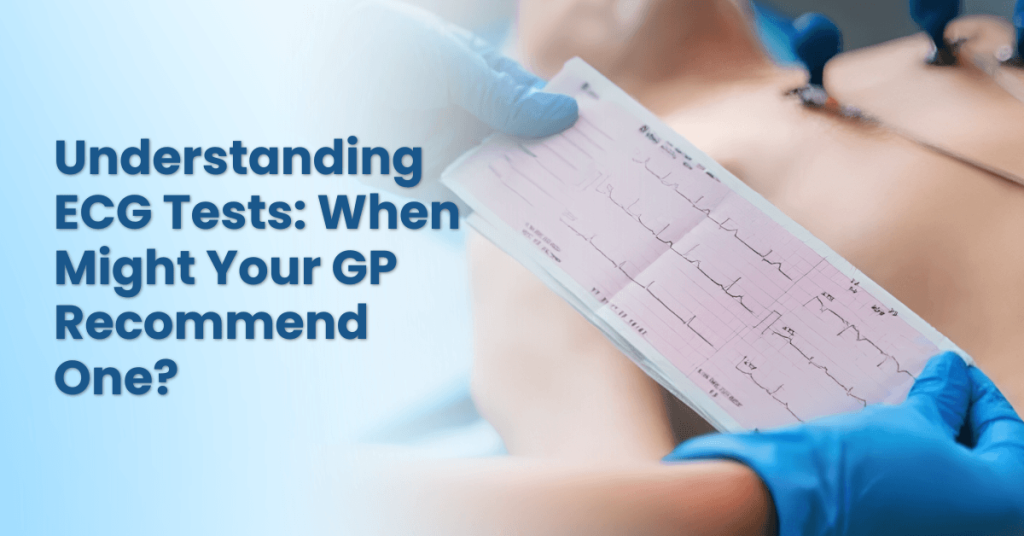
Heart health is an important part of overall wellbeing, and one of the simplest ways to assess how your heart is functioning is through an ECG test. Also known as an electrocardiogram, an ECG is a quick, painless test that records the electrical activity of your heart.
Your GP may recommend an ECG if you’re experiencing symptoms such as chest pain, dizziness, palpitations or shortness of breath, or as part of a broader cardiovascular health assessment. While an ECG cannot diagnose every heart condition, it provides valuable information that helps your doctor determine whether further investigation or treatment is needed.
What Is an ECG Test?
An ECG (electrocardiogram) test records the electrical signals that control your heartbeat.
Every time your heart beats, electrical impulses travel through the heart muscle, causing it to contract and pump blood around your body. An ECG captures these signals and displays them as wave patterns, allowing your GP to assess whether your heart rhythm and electrical activity appear normal.
An ECG is one of the most commonly performed heart investigations in general practice because it is:
- Quick
- Non-invasive
- Painless
- Safe
- Does not involve radiation
Most ECGs take only a few minutes to complete.
When Might Your GP Recommend an ECG Test?
Your GP may suggest an ECG if you have symptoms that could indicate a heart condition or if you have certain risk factors for cardiovascular disease.
Common reasons include:
Chest Pain
Chest discomfort should always be assessed by a healthcare professional.
An ECG may help identify changes that could suggest reduced blood flow to the heart or other cardiac concerns.
Heart Palpitations
If you notice your heart racing, skipping beats or beating irregularly, an ECG may help detect abnormal heart rhythms (arrhythmias).
Irregular Heartbeat
Some heart rhythm disturbances are only discovered during routine examinations.
An ECG can identify many common rhythm abnormalities.
Dizziness or Fainting
Episodes of dizziness, light-headedness or unexplained fainting may occasionally be related to heart rhythm problems, making an ECG an appropriate first investigation.
Shortness of Breath
Although many conditions can cause breathlessness, your GP may perform an ECG to help determine whether your heart could be contributing to your symptoms.
High Blood Pressure or Cardiovascular Risk
People with ongoing high blood pressure, diabetes, elevated cholesterol or a strong family history of heart disease may have an ECG as part of their broader cardiovascular assessment.
How Is an ECG Performed?
Many people are surprised by how simple an ECG actually is.
During the test:
- You’ll be asked to lie comfortably on an examination bed.
- Small adhesive electrodes are placed on your chest, arms and legs.
- The electrodes are connected to the ECG machine using wires.
- You’ll be asked to remain still and breathe normally while the recording is taken.
The machine records your heart’s electrical activity in just a few seconds.
No electricity passes into your body; the electrodes simply detect the heart’s natural electrical signals.
How Is an ECG Performed on a Woman?
The procedure is essentially the same for everyone.
For women, some electrodes are placed on the chest to obtain accurate recordings. A trained healthcare professional will position the electrodes respectfully while maintaining your privacy and comfort throughout the procedure.
If necessary, you may be provided with a gown or drape during the test.
What Can an ECG Show?
An ECG provides valuable information about how your heart is functioning at that moment.
It may help identify:
- Irregular heart rhythms (arrhythmias)
- Fast or slow heart rates
- Signs of previous heart damage
- Evidence suggesting reduced blood flow to the heart
- Certain structural heart abnormalities
- Some electrolyte disturbances
- Effects of certain medications
It is important to remember that an ECG is only one part of your overall clinical assessment.
Your GP will interpret the results alongside your symptoms, examination findings and medical history.
What Do ECG Test Results Mean?
Your ECG report may be described as:
Normal
A normal ECG means that no significant abnormalities were detected during the recording.
This is reassuring, but it does not completely rule out every possible heart condition.
Abnormal
An abnormal ECG does not necessarily mean you have serious heart disease.
Some ECG changes are harmless, while others may require additional investigation.
Depending on the findings, your GP may recommend:
- Repeat ECG
- Blood tests
- Holter monitor
- Echocardiogram
- Exercise stress testing
- Referral to a cardiologist
If My ECG Is Normal, Does That Mean My Heart Is Healthy?
Not always.
A normal ECG is encouraging, but it only records your heart’s activity during the brief period when the test is performed.
Some heart problems occur intermittently and may not be captured during a routine ECG.
If your symptoms continue despite a normal ECG, your GP may recommend further testing to investigate the cause.
Does an ECG Detect Every Heart Condition?
No.
Although an ECG is an excellent screening tool, it cannot diagnose every heart problem.
Some conditions require additional investigations such as:
- Echocardiography (heart ultrasound)
- Holter monitoring
- Event monitoring
- Exercise stress testing
- CT coronary angiography
- Blood tests
Your GP will decide which investigations are appropriate based on your individual situation.
Is an ECG Painful?
No.
An ECG is completely painless.
The adhesive electrodes may feel cool when applied, and removing them afterwards may briefly pull on body hair, but the procedure itself is comfortable.
There are no injections, needles or electrical shocks involved.
How Long Does an ECG Take?
The recording itself usually takes less than one minute.
Including preparation and electrode placement, the appointment generally takes around 10–15 minutes.
Can an ECG Be Done During a GP Appointment?
Yes.
Many general practices perform ECGs on-site when clinically appropriate.
If your GP recommends an ECG during your consultation, it may be performed immediately or scheduled shortly afterwards, depending on your symptoms and the clinic’s facilities.
Looking After Your Heart
An ECG is only one part of maintaining good cardiovascular health.
Other important ways to support your heart include:
- Monitoring your blood pressure
- Managing cholesterol
- Staying physically active
- Eating a balanced diet
- Maintaining a healthy weight
- Not smoking
- Managing diabetes
- Attending regular health assessments
Regular check-ups allow your GP to identify cardiovascular risk factors early and recommend appropriate prevention strategies.
ECG Testing at Wollongong Doctors
At Wollongong Doctors, our experienced GPs provide comprehensive heart health assessments, including ECG testing where clinically indicated.
Whether you’re experiencing chest discomfort, palpitations, dizziness or simply want to assess your cardiovascular health, our team can evaluate your symptoms, perform appropriate investigations and discuss any further care that may be needed.
If you have concerns about your heart health, booking an appointment with your GP is an important first step.
Frequently Asked Questions
When might a GP recommend an ECG test?
A GP may recommend an ECG if you have symptoms such as chest pain, palpitations, dizziness, fainting, shortness of breath or as part of a cardiovascular health assessment for people with heart disease risk factors.
How is an ECG test done?
Small adhesive electrodes are placed on your chest, arms and legs while you lie comfortably. The machine records your heart’s electrical activity in just a few seconds. The procedure is painless and non-invasive.
What do ECG test results show?
An ECG can identify abnormal heart rhythms, previous heart damage, changes suggesting reduced blood flow to the heart and other electrical abnormalities. Your GP interprets the results alongside your symptoms and medical history.
If an ECG is normal, is my heart OK?
A normal ECG is reassuring but does not rule out every heart condition. Some problems occur intermittently or require different tests for diagnosis. Your GP may recommend additional investigations if symptoms continue.
How is an ECG performed on a woman?
The procedure is the same for everyone. Chest electrodes are positioned respectfully by trained healthcare professionals while maintaining patient privacy and comfort throughout the examination.
Can I book an ECG test with a GP?
Yes. Many GP clinics, including Wollongong Doctors, offer ECG testing when clinically appropriate. Your GP will determine whether an ECG is recommended based on your symptoms and medical history.
The Bottom Line
An ECG test is a quick, safe and painless way to assess your heart’s electrical activity. It plays an important role in investigating symptoms such as chest pain, palpitations and dizziness, as well as monitoring cardiovascular health in people with known risk factors.
If you’re experiencing concerning symptoms or would like a heart health assessment, your GP can determine whether an ECG is appropriate and guide you through any further investigations that may be needed.
References
- Healthdirect Australia. Electrocardiogram (ECG). https://www.healthdirect.gov.au/electrocardiogram-ecg
- Royal Australian College of General Practitioners (RACGP). Guidelines for Preventive Activities in General Practice (Red Book). https://www.racgp.org.au/clinical-resources/clinical-guidelines/key-racgp-guidelines/red-book
- National Heart Foundation of Australia. Guideline for Assessing Absolute Cardiovascular Disease Risk. https://www.heartfoundation.org.au
- Australian Commission on Safety and Quality in Health Care. Acute Coronary Syndromes Clinical Care Standard. https://www.safetyandquality.gov.au